


WOTAM kick-off: Europe studies working time reduction
Few workplace ideas split opinion like working time reduction (WTR). Four-day weeks, shorter shifts and flexible hours all get plenty of attention. Yet adoption varies widely between countries, sectors and regions. The EU-funded WOTAM project is investigating the barriers and enablers that shape whether WTR is accepted at all.
WOTAM (WOrking Time Acceptance Model) starts from the view that empirical evidence alone rarely persuades decisionmakers to adopt WTR unless symbolic factors support it. The project looks at how facts get mobilised to encourage or block WTR, and how that differs across regions and sectors. It is funded under Horizon Europe, and its consortium brings together 13 institutions.
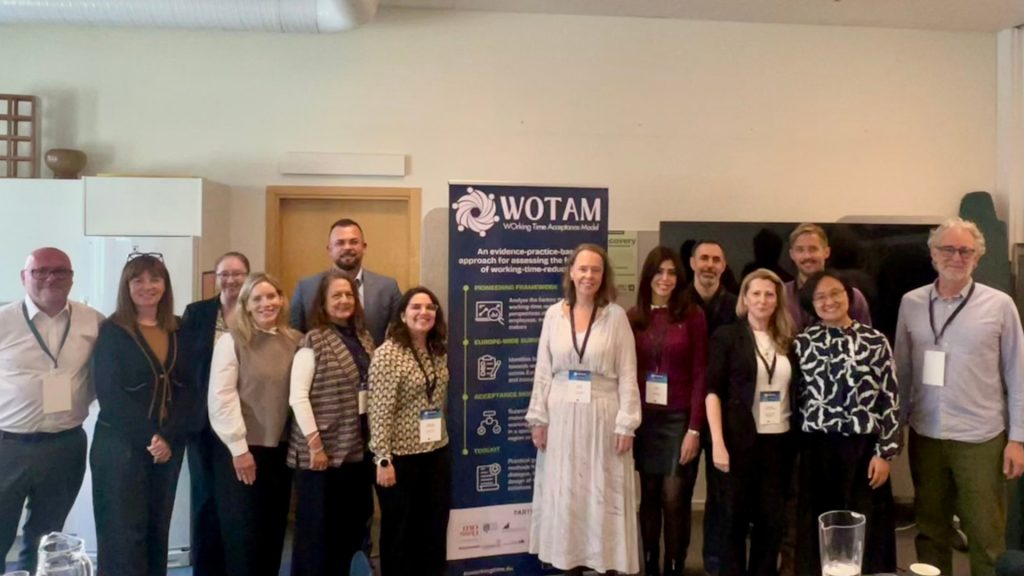
The project’s official kick-off took place at Mälardalen University in Västerås, Sweden. Researchers, employers, trade unions and industry representatives from across Europe came together. That mix matters. WTR is never only an academic question, and it affects people on every side of the employment relationship. Putting them in one room from the first day sets the tone for the work ahead.
WOTAM will create tools that can assess whether WTR is feasible in different regions and sectors. It will also assess the impact of WTR in at least two of three areas: economic, social and environmental. The toolkit won’t tell anyone to adopt or reject WTR. It is meant to support informed, evidence-based conversations.
Our role?
BluSpecs leads communication and dissemination for WOTAM. Our job is to make sure the project’s findings reach the people who can use them: policymakers, employers, trade unions and the wider public. Research only changes decisions if people can follow it. That means clear language, steady updates and outputs that make sense outside academic circles.
This October, Sarah Rose Flynn, Senior Consultant, led a consortium workshop to shape the Acceptance and Feasibility Model and the toolkit built on it. The session looked at factors from labour law and social norms to workplace realities such as staffing and work design. It also covered four types of feasibility: operational, economic, institutional and social.