


What does it takes to close ICT’s gender gap
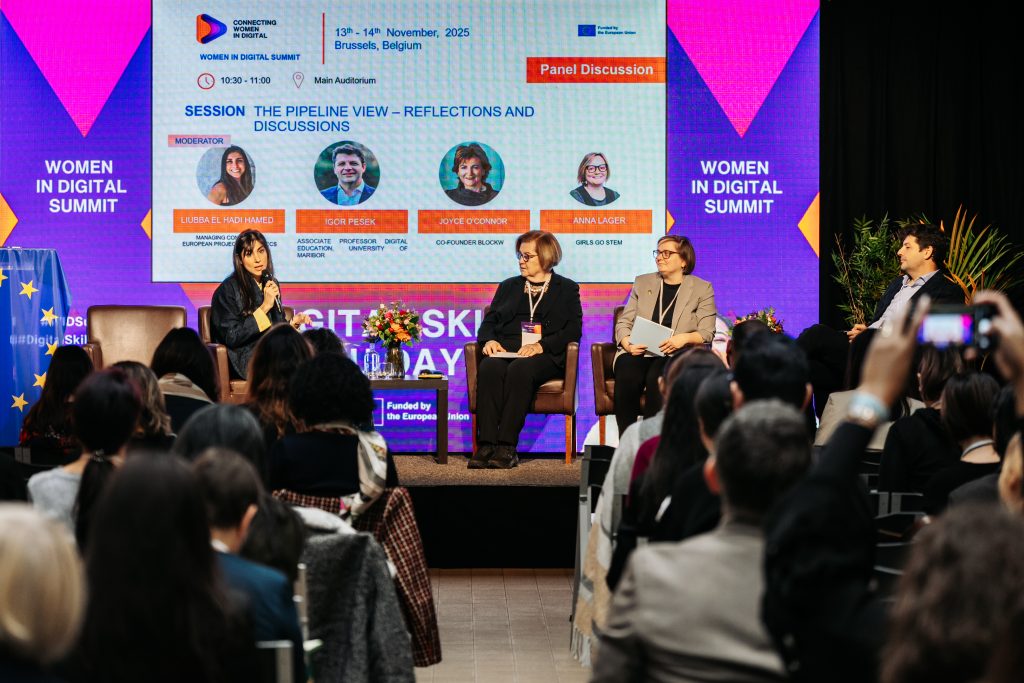
In the world of Information and Communications Technology (ICT), talent is abundant, but it isn’t always equally accessible. Young girls show interest in technology, only to step away as they progress through education and into professional life. This phenomenon, often called the “leaky pipeline,” formed the centrepiece the panel discussion “The pipeline view” at the Women in Digital Summit moderated by our managing consultant Liubba El Hadi Hamed aimed at understanding and addressing gender disparities in ICT careers.
“To attract more girls to ICT, we need a fundamental shift in both social norms and how technology is taught in schools”, noted Igor Pesek, Associate Professor and former Head of Digital Education Service, Slovenia.
Girls Go STEM: a case study in success
Anna Lager shared the story of Girls Go STEM, an EU educational initiative designed to reduce the gender gap among secondary school students. Originally known as Girls Go Circular, the programme has been running since 2020 and has already reached impressive milestones.
Programme highlights:
- 28 online courses in 27 languages
- 19,000 students trained in the past year alone
- Ahead of its KPI of reaching 14,000 girls by 2027, thanks to strategic partnerships
“By aligning our courses with national curricula and working closely with teachers, we’ve already exceeded our 2027 targets, three years ahead of schedule,” Lager explained.
Why it works:
- Partnerships at local and national levels enable rapid adoption
- Integration with existing curricula makes teacher uptake seamless
- Courses are designed to boost girls’ confidence, not just promote equity
- Shifting teacher mindsets encourages the inclusion of these programmes in regular lessons
The Girls Go STEM initiative proves that targeted interventions can make a measurable difference in girls’ engagement with ICT.
Systemic barriers: why the pipeline leaks
Panelist Igor Pesek highlighted how systemic challenges in education make it difficult to address gender disparities effectively. The issues are embedded within both school structures and cultural expectations:
- Teachers’ ICT experience is limited: without hands-on knowledge, educators struggle to showcase the creative and professional potential of technology.
- Curricula are narrowly focused: lessons often emphasise using digital tools rather than understanding what technology can create or enable.
- Societal norms need evolution: encouraging girls to pursue ICT careers requires changes in both classroom practices and wider cultural expectations.
“ICT is inherently transversal, but this is not well communicated in schools, curriculum reform should move beyond tool usage to understanding technology creation and innovation.”
These systemic issues mean that girls often lack both awareness and confidence in their ability to succeed in technology from an early age.
Professional ecosystems: beyond the classroom
Education alone cannot close the gap. Women entering the ICT workforce encounter a new set of barriers, from pay gaps to limited career progression. Joyce O’Connor, co-founder of BlockW, emphasised that closing the gender gap in ICT requires programmes that are firmly evidence-based, using data to identify barriers and measure impact.
She highlighted that critical weaknesses remain in the ecosystem, particularly around mentoring, professional training, and the visibility of women in technology. To address these gaps, O’Connor stressed the importance of cross-sector collaboration and targeted communication strategies, including engaging young influencers, as essential tools to amplify impact and inspire the next generation of women in ICT.
See more of our discussions during the Digital Skills EU Days
Closing the digital divide: strengthening the pipeline for women in technology
Bridging the gender gap in ICT is not simply about providing opportunities, it requires systemic change, thoughtful interventions, and a connected ecosystem that supports women from the classroom to the boardroom. Programmes like Girls Go STEM show what is possible when education is purposeful and partnerships are strategic, while insights from BlockW remind us that the professional pipeline still needs nurturing. Creating a truly inclusive digital future challenges us to ask: how can we, as educators, policymakers, and industry leaders, ensure that every girl and woman has not only access to technology, but the confidence and support to shape it?